VISIT OUR SHOP FOR GREAT DEALS ON PAT TESTING, ELECTRICAL TESTING, ACCESSORIES AND MORE...

Essential Guide to PAT Testing for Landlords
As a landlord, your mental checklist never truly ends. Between arranging gas safety certificates and checking for damp, specific electrical protocols often feel like just another complicated hurdle. Yet, ensuring the appliances in your rental are safe is about more than just ticking a box; it is the most effective way to protect your tenants and secure your investment against avoidable risks.
While the law may not explicitly demand an annual certificate in every single scenario, regulations regarding the legal requirements for electrical safety are clear about your "Duty of Care." You must ensure all equipment provided is safe. Portable Appliance Testing (PAT) acts as your proof of compliance. Think of it like a vehicle MOT for anything with a plug—it confirms that the kettle, microwave, or washing machine is roadworthy and safe to use right now.
Many property owners find themselves confused by the difference between EICR and portable appliance testing. An Electrical Installation Condition Report (EICR) focuses on the fixed wiring inside your walls, such as sockets and fuse boxes. In contrast, PAT testing covers the items you plug into those sockets. If you can unplug it—even if it is a heavy fridge—it generally falls under this portable category.
Navigating these safety standards does not require an engineering degree. This guide breaks down the essential steps for PAT testing for landlords, helping you distinguish between myth and necessary action so you can manage your property with total confidence.
Why PAT Testing is Your Safety 'Health Check' (Not Just a Box-Ticking Exercise)
Think of your rental property’s appliances like a used car. You wouldn't drive a vehicle for years without an annual MOT to check the brakes and engine, and electrical items require that same level of vigilance. While a kettle or washing machine might look perfectly fine sitting on the counter, dangerous wear and tear often happens inside the casing where you can't see it. Recognizing the importance of portable appliance safety stickers isn't just about satisfying a fussy insurance agent; it is about ensuring the "engine" of your provided goods isn't silently overheating or preparing to short-circuit.
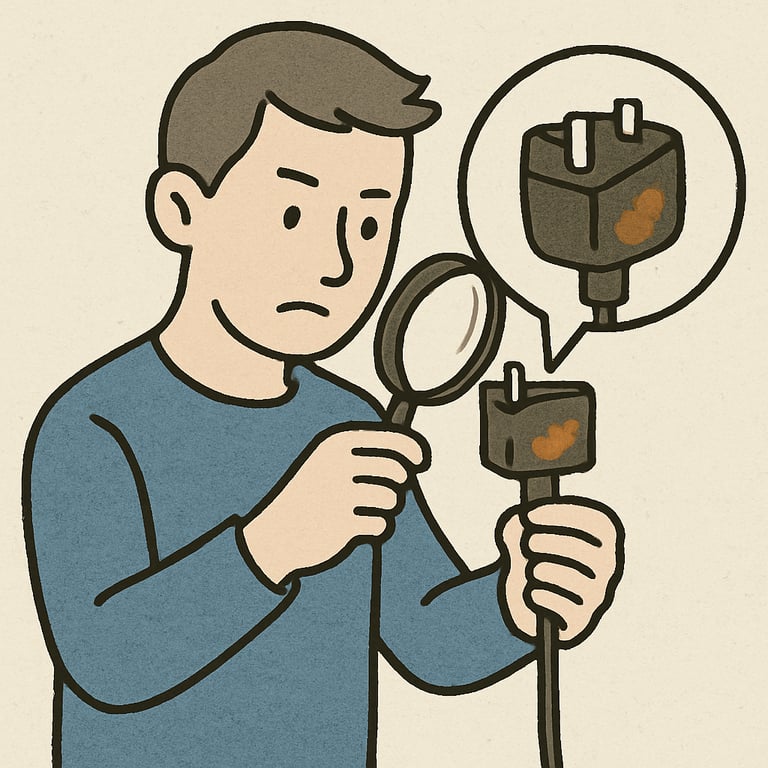
Visual checks are an essential first step, but they only tell half the story. You can easily spot a cracked plug or a cut cable, but you cannot see if the internal mechanisms are failing. A basic visual inspection checklist for electrical appliances will catch surface damage, but a formal PAT test uses specialized equipment to detect invisible faults such as:
Loose earth connections inside the unit that could cause a fatal shock.
Incorrect fuses that are too strong to blow during a surge, leading to fires.
Internal frayed wires caused by repeated pulling or twisting of the cord.
Considering that roughly 25% of domestic electrical fires are attributed to faulty appliances or leads, relying on guesswork is a high-stakes gamble. A passed test provides a paper trail proving you actively looked for these hidden dangers, which is vital for your liability protection.
Is PAT Testing a Legal Requirement? Decoding the 'Duty of Care' for Landlords
Confusion often arises because no single statute explicitly mandates an annual "PAT certificate" for every standard rental in the same way a Gas Safety Certificate is required. However, the Electrical Equipment (Safety) Regulations 1994 and the Landlord and Tenant Act 1985 create a strict "Duty of Care" framework that effectively makes it compulsory. You are legally required to ensure that all provided equipment is safe at the start of a tenancy and maintained throughout. While the law focuses on the safety result rather than the specific method, answering the question "is PAT testing a legal requirement for landlords" usually leads to a "yes" from legal experts because it is the most robust way to prove you met your obligations if an accident occurs.
Risk profiles change drastically when managing shared housing, leading to much tighter enforcement. Under the Housing Act 2004, portable appliance testing regulations for HMO properties are often explicitly required as a condition of the licensing agreement. Local councils frequently demand valid test certificates before issuing an HMO license because shared kitchens with multiple tenants using the same microwave or toaster increase wear significantly. Ignoring these safety standards is costly; beyond the moral weight of a tenant injury, the penalties for non-compliant electrical safety in rentals can be severe, including unlimited fines and imprisonment for serious breaches, or civil penalties of up to £30,000.
Navigating these regulations ultimately comes down to risk mitigation rather than doing the bare minimum. Even for single-let properties where the rules seem looser, most landlord insurance policies invalidate coverage if you cannot produce maintenance records for the electrical goods you supply. Proving safety requires understanding not just the law, but the equipment itself, as different appliances require different levels of scrutiny based on how they are built.
Who Owns the Risk? Separating Landlord Appliances from Tenant Belongings
One of the most common worries for landlords is whether they are liable for a fire caused by a tenant’s faulty heater or game console. Generally, the frequency of testing for provided versus tenant-owned appliances differs significantly because your legal duty primarily covers the equipment you supply with the tenancy. If a tenant brings their own television, hair straightener, or laptop charger, the responsibility for its safety rests with them. To protect yourself from liability, ensure your inventory explicitly lists which items belong to the property and have been safety checked.
Fixed appliances can sometimes blur these lines. For example, a built-in oven hardwired directly into the wall is technically part of the building's electrical installation. This means it is covered by your 5-year EICR (Fixed Wire Test) rather than portable appliance testing. However, freestanding white goods and smaller gadgets you provide must be checked regularly. Common landlord-owned items requiring attention include:
Microwave
Toaster and Kettle
Vacuum Cleaner
Refrigerator (freestanding)
Table Lamps
Be aware that rules tighten significantly if you are running a short-term rental. The electrical safety obligations for furnished holiday lets are often more rigorous due to the high turnover of guests and increased wear and tear. Regardless of your tenancy type, clearly defining what you own allows you to create a testing schedule that ensures safety without wasting money on items that aren't your responsibility.
How Often Should You Test? Setting a Sensible Schedule for Different Property Types
Unlike Gas Safety checks, which have a strict annual deadline, electrical regulations for portable appliances allow for more common sense. You do not necessarily need to test every single item every 12 months if the risk is low. Instead, the Health and Safety Executive (HSE) recommends a risk-based approach. This simply means that high-use items in busy properties need more frequent attention than a table lamp in a quiet, long-term let.
When determining how often should appliances be tested in a tenanted home, the most practical trigger is a change of tenancy. Tenants may not report minor damage, such as a cracked plug on a vacuum cleaner or a loose wire on a toaster, so inspecting equipment before a new resident moves in prevents liability issues later. However, be aware that the rules shift if you are managing short-term rentals. The electrical safety obligations for furnished holiday lets are generally stricter because the equipment sees heavier use and guests are less familiar with how your specific appliances work.
To keep your property compliant without overspending on unnecessary checks, consider these industry-standard guidelines as a baseline for your schedule:
HMOs (Houses in Multiple Occupation): Annual testing is strongly recommended due to high wear and tear.
Standard Single Let: Visual inspections at every change of tenancy; formal testing every 2 years.
Furnished Holiday Lets: Visual checks at every guest changeover; formal testing annually.
Once you have established a sensible timeline, the next hurdle is understanding exactly who is legally qualified to carry out these inspections.
The 'Competent Person' Rule: Who is Qualified to Carry Out Your Inspections?
The term "Competent Person" often appears in safety regulations, yet it causes significant confusion for property owners who simply want to stay compliant. Legally, this designation does not automatically require a fully qualified electrician, but rather describes someone possessing sufficient technical knowledge and experience to prevent danger and injury. While a landlord can gain this status through specific training courses, most opt to hire a specialist PAT technician or electrician to ensure they are meeting the strict definition of who is considered a competent person for electrical inspections.
The vast majority of electrical faults can actually be spotted without plugging in a single diagnostic tool. A thorough visual inspection checklist for electrical appliances involves examining the plug for cracks, ensuring the cable is securely gripped, and checking that no colored wires are visible outside the casing. However, internal damage—such as a disconnected safety wire inside a metal toaster—remains invisible to the naked eye. This is where professional equipment becomes essential to verify that the internal safety features you cannot see are functioning correctly.
Attempting to handle the full process yourself carries a hidden risk regarding liability if an accident occurs. While performing your own interim visual checks is excellent proactive maintenance, hiring a certified professional provides an objective audit trail that stands up to scrutiny. This third-party validation is often the defining factor in a successful defense, acting as independent proof that you took your responsibilities seriously.
Protecting Your Insurance: Why Safety Certificates are Your 'Get Out of Jail Free' Card
Many landlords assume their policy covers electrical fires automatically, but fine print often requires specific proof of due diligence. If a tenant is injured by a faulty kettle and you cannot prove it was safe at the start of the tenancy, your insurer may refuse the claim. This reality makes strict landlord insurance validity and electrical safety records just as vital as the policy itself; without the paperwork, your coverage might be void when you need it most.
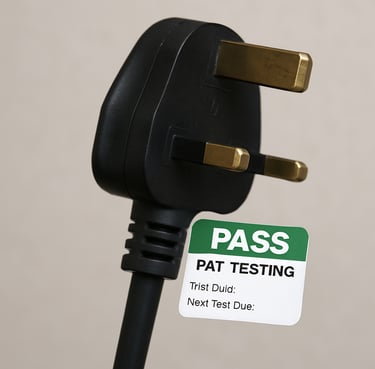
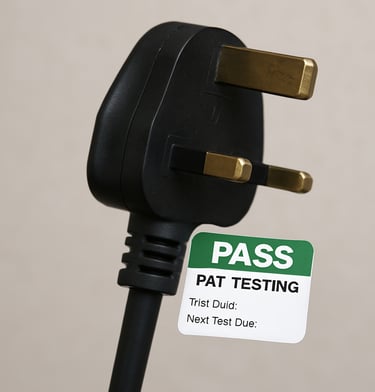
Relying solely on the green "Pass" stickers on appliance plugs is a common mistake; they often fade or peel off over time. For robust protection, you need a centralized digital inventory. Maintaining a landlord electrical equipment register is the gold standard for tracking assets and proving compliance. Your simple spreadsheet should track:
Item Description: (e.g., "Samsung Microwave")
Location: (e.g., "Kitchen Counter")
Test Date: When the inspection occurred
Result: Pass or Fail status
Beyond distinct safety benefits, this level of organization can have immediate financial perks. Some insurers view a comprehensive register and up-to-date certificates as evidence of lower risk, potentially allowing you to negotiate better rates during renewals. With the importance of documentation clear, we turn next to budgeting for these checks.
Managing the Cost: What to Expect from Professional Testing Rates
Budgeting for safety checks often brings a pleasant surprise: volume drives the price down significantly. While a technician might charge a minimum call-out fee of £50 to £80 regardless of workload, the cost per item for professional electrical testing drops rapidly once that threshold is met, typically landing between £1.50 and £3.00 per appliance. This pricing structure means that asking an electrician to test a single microwave is financially inefficient, whereas testing every lamp, kettle, and heater in a fully furnished flat offers far better value for your money.
Smart scheduling is the most effective way to further reduce these operational expenses. Since professional electrical safety certificate validity periods vary—with EICRs lasting five years and PAT recommendations often being annual—landlords save the most by aligning portable appliance checks with other mandatory visits, such as the annual Gas Safety inspection. By hiring a multi-trade firm to handle both gas and electrical assessments in a single appointment, you eliminate duplicate call-out charges and minimize disruption to your tenants, setting the stage for a streamlined approach to total compliance.
Your 5-Step PAT Compliance Checklist: Moving from Confusion to Complete Safety
Navigating electrical safety regulations no longer needs to be a source of anxiety. You now see that managing appliances is simply a regular maintenance habit, much like checking the boiler, which protects both your property and your tenants. To secure that peace of mind immediately, follow this streamlined workflow:
List every portable item, from toasters to washing machines.
Perform a visual inspection checklist for electrical appliances to catch obvious damage.
Book a competent person to conduct the formal tests.
File your certificate and ensure every item has a "Pass" label.
Set a calendar reminder to review this list in 12 months.
Proper PAT testing for landlords is the definitive way to prove your duty of care and keep your insurance valid. By staying proactive rather than reactive, you transform potential hazards into documented safety, ensuring your rental business remains professional, compliant, and risk-free.
VDELECTRICAL LTD
E: hello@vdelectrical.co.uk
T: 01323 304840
© 2025 VDElectrical Ltd. All rights reserved. Co Reg.08569782. VAT 347563574

49 Station Rd, Polegate BN26 6EA